Pay in installments of $6.09 with
 ,
,
 and
and

Shipping Estimate
USA
- USA
- CAN
- USA
- CAN
Ships within 48 hours · Estimated delivery Jul 2 - Jul 7
 Promo Codes Available:
For Your Every Summer RSVP, with Code: SUMMER15
Description
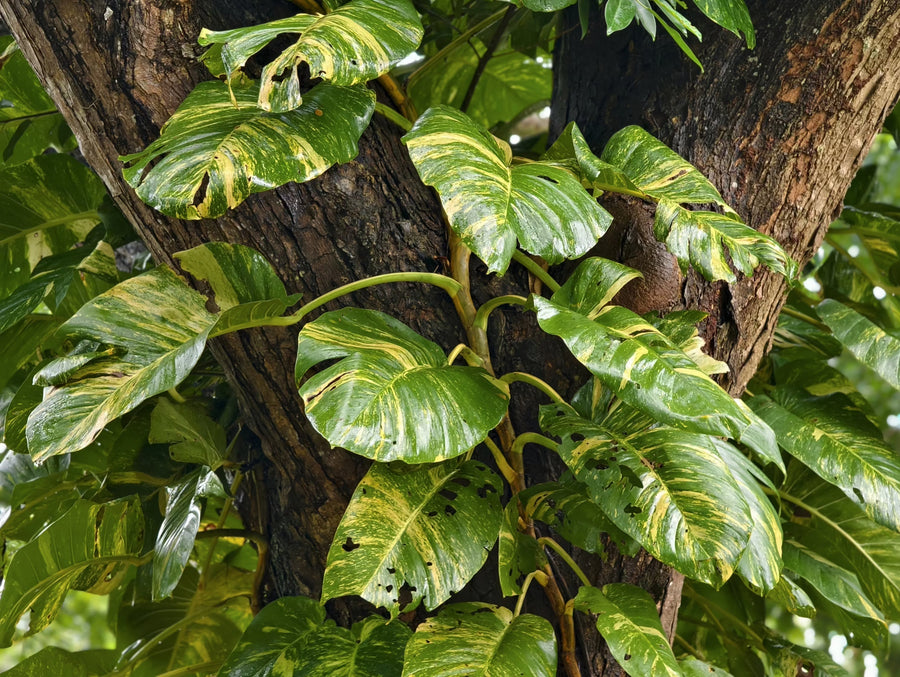
jade golden pothos Epipremnum aureum 'Pearls and Jade' – Speckled White PothosEpipremnum aureum 'Pearls and Jade' compact white edged variegation on a slower growing indoor vine Epipremnum aureum 'Pearls and Jade' is a compact variegated cultivar valued for its crisp white margins, mottled green centres, and smaller, more textured leaves. Compared with broader marbled forms such as 'Marble Queen', it looks neater, more detailed, and more controlled. The pattern often combines white, green, and silvery grey tones in the same
Epipremnum aureum 'Pearls and Jade' – compact white-edged variegation on a slower-growing indoor vine
Epipremnum aureum 'Pearls and Jade' is a compact variegated cultivar valued for its crisp white margins, mottled green centres, and smaller, more textured leaves. Compared with broader marbled forms such as 'Marble Queen', it looks neater, more detailed, and more controlled. The pattern often combines white, green, and silvery-grey tones in the same leaf, with much of the variegation concentrated toward the edges rather than spread broadly across the blade.
That makes Epipremnum aureum 'Pearls and Jade' especially useful in smaller indoor spaces. It still trails or climbs like other Epipremnum forms, but the shorter internodes and smaller leaves keep it visually tighter for longer. It is not as fast as greener pothos cultivars, yet that slower pace is part of the appeal when you want variegation without a plant that quickly overruns its spot.
How Epipremnum 'Pearls and Jade' differs in leaf pattern and plant form
- Leaf size: Leaves are smaller than those of many other Epipremnum aureum cultivars, which helps keep the plant looking neat and compact.
- Variegation placement: White variegation is often strongest along the margins rather than only through the middle of the leaf.
- Colour mix: Pale areas are often flecked or mottled with green and silvery-grey rather than staying flat white.
- Leaf surface: Blades tend to be lightly rippled or irregularly undulated instead of completely smooth.
- Growth habit: Plants stay fuller and denser early on, then gradually form trailing or climbing vines with age.
- Indoor impression: The smaller scale and sharper patterning give it a more detailed, refined look than broader, looser marbled cultivars.
Species background and cultivar identity of Epipremnum 'Pearls and Jade'
- Accepted species: Epipremnum aureum, a member of Araceae
- Native origin of species: Mo'orea in French Polynesia
- Cultivar origin: 'Pearls and Jade' is the patented University of Florida selection ‘UFM12’, developed from irradiated cuttings of 'Marble Queen' and fixed through vegetative propagation.
- Key cultivar traits: Small variegated leaves with three colours, irregularly undulated surfaces, and a compact dense growth habit.
- Growth type: Evergreen climber with aerial roots that can trail, scramble, or attach to support.
- Flowering: Indoors it is grown for foliage; flowering has not been observed in the patent description and is very rare in cultivation.
- Toxicity: Plant tissue contains insoluble calcium oxalate crystals and is not safe for pets or people to chew.
What Epipremnum aureum 'Pearls and Jade' needs indoors
- Light: Bright, indirect light keeps growth steady and helps the patterned foliage stay clear and well formed. If you want a clearer feel for placement, our guide to bright indirect light for houseplants is the most relevant read here.
- Watering: Water thoroughly, then let roughly the top 30–40% of the substrate dry before watering again. Constant wetness causes more trouble than a short dry interval.
- Substrate: Use a loose, airy mix that drains well but still holds some moisture. Potting mix or coco coir with bark and perlite works well.
- Humidity: Average indoor humidity is usually enough, though around 40–60% helps new leaves open more cleanly and keeps edges in better condition.
- Temperature: Aim for 18–29°C and avoid prolonged cold, cold drafts, or a wet root zone in cool conditions.
- Feeding: Apply a balanced liquid fertilizer at low to moderate strength every 4–6 weeks while the plant is actively growing.
- Repotting: Repot when roots fill the pot heavily or when the substrate has broken down and no longer dries evenly. Increase pot size only slightly.
Trailing, climbing, and propagation habits of Epipremnum 'Pearls and Jade'
- As a trailing plant: Left unsupported, it forms finer-textured vines than broader-leaved cultivars and stays visually tidy for longer.
- As a climber: On a slim pole, plank, or trellis, aerial roots can attach and support stronger upward growth over time.
- Pruning: Cut stems just above a node to keep the plant fuller and to reduce sparse stretches.
- Propagation: Stem cuttings with at least one node root readily in water or lightly moist substrate when kept warm.
- Water culture and mineral substrates: Epipremnum aureum 'Pearls and Jade' can adapt to water culture or inert mineral substrates if roots are transitioned gradually and nutrients stay steady.
- Routine care: Wipe dust from the leaves from time to time so the smaller variegated patterns stay easy to see.
Common issues with Epipremnum 'Pearls and Jade'
- Yellow leaves: Usually linked to roots staying wet too long, poor drainage, or a potting mix that has compacted.
- Brown edges or tips: Most often come from prolonged dryness, uneven watering, fertilizer salt buildup, or very dry air.
- Fungus gnats: Often point to a potting mix that stays moist for too long. Let the surface dry more between waterings and, if needed, see our guide to fungus gnats on houseplants.
- Weak or undersized new leaves: Often caused by low light, depleted substrate, strong root congestion, or missed feeding over time.
- Soft stems or blackened nodes: Commonly indicate rot after wet and cold conditions around the roots.
- Pests: Check regularly for mealybugs, thrips, spider mites, and scale, especially around nodes and on leaf undersides.
Why the name Epipremnum 'Pearls and Jade' fits this cultivar
Epipremnum comes from Greek and refers to growth upon a trunk, matching the species’ natural climbing habit. aureum means “golden,” referring to the yellow-marked wild type rather than this cultivar’s white-heavy patterning. The cultivar name 'Pearls and Jade' suits the mix of white, green, and grey-green tones that give the leaves a finer, more detailed appearance.
Choose Epipremnum 'Pearls and Jade' for tighter growth and crisp variegation
Choose Epipremnum aureum 'Pearls and Jade' if you want a variegated indoor climber with smaller leaves, white-edged patterning, and a more compact habit than broader marbled pothos cultivars. With bright indirect light, an airy mix, and a steady watering rhythm, it stays decorative, manageable, and easy to grow.
Shipping Notes
- Free Standard Shipping on $100+ Orders to the USA.
- Except Preorder products are shipped in 48 hours.
- Delivery to the USA:
- Standard Shipping : 3-10 business days
- If time is of the essence, please consider selecting expedited delivery for faster service.
Exchange/Return Notes
- We offer a 30-day return/exchange service after receiving.
- Final sale items are not eligible for returns or exchanges.
- To process your return/exchange, please contact us at [email protected]
- Please click here for more details>>> Return & Exchange Policy